

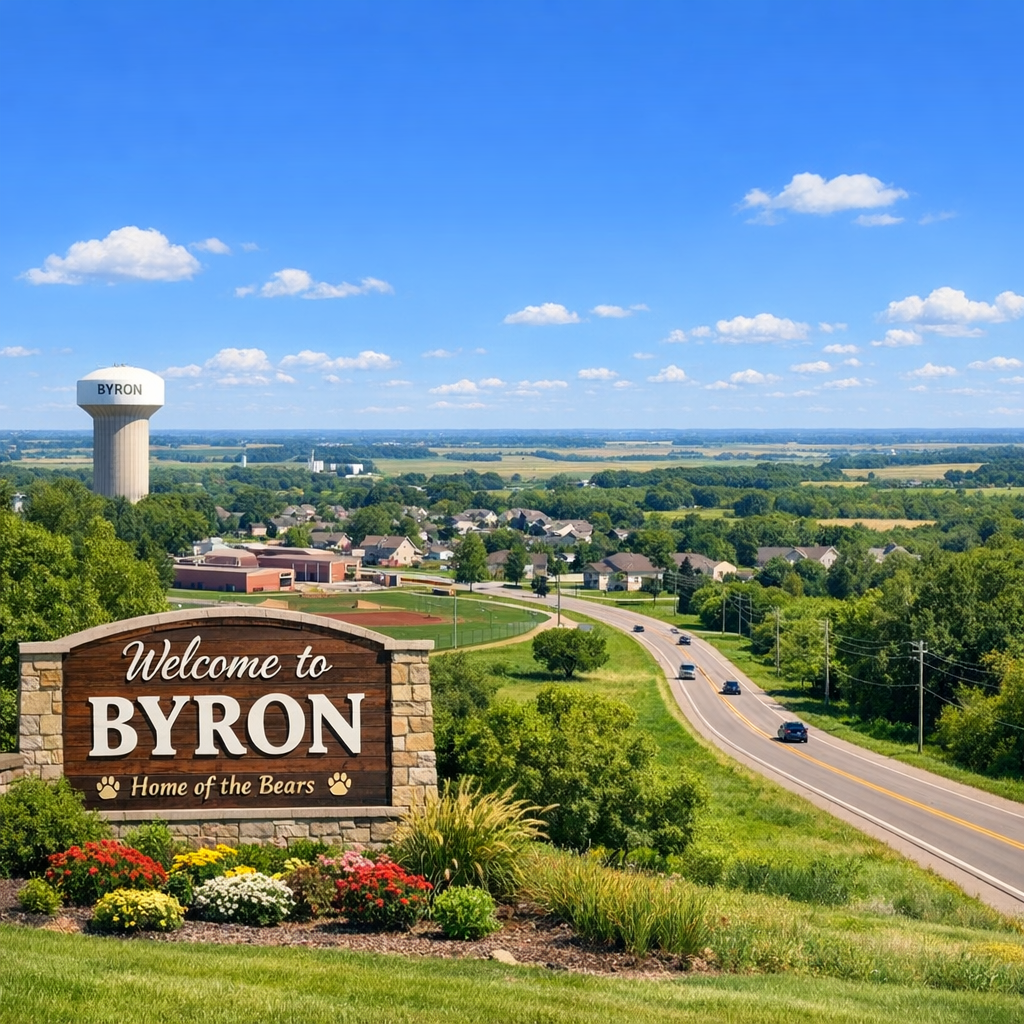
Byron, Minnesota, experiences a diverse range of weather conditions throughout the year, characteristic of a humid continental climate. Understanding these patterns can help residents prepare for seasonal changes and environmental challenges.
Seasonal Temperature Variations
Winters in Byron are notably cold, with average low temperatures in January around 6.2°F and highs reaching approximately 22.4°F. Summers, on the other hand, are warm and pleasant. July, the warmest month, sees average highs of about 80.4°F and lows around 60.7°F. This significant temperature variation between seasons is typical for the region.
Precipitation and Snowfall
Precipitation in Byron is fairly evenly distributed throughout the year, with an annual average of 34.7 inches. June tends to be the wettest month, averaging 5 inches of rainfall. Snowfall is a common feature of the winter months, with December averaging 4.7 inches of snow. The snowy period typically lasts from late October to early April.
Humidity and Wind Patterns
Humidity levels fluctuate seasonally. January has the highest relative humidity at 91%, while October is the least humid month at 74%. Wind speeds also vary, with April being the windiest month, averaging 10.4 mph, and July and August being the calmest, averaging 7.4 mph.
Environmental Considerations
Recent trends indicate changes in precipitation patterns, with more intense and irregular rainfall events. This can lead to challenges such as flooding and water management issues. Residents are encouraged to stay informed about local water conservation measures and to participate in community efforts to manage water resources effectively.
By staying aware of these climate patterns and environmental considerations, Byron residents can better prepare for seasonal changes and contribute to the community’s resilience against weather-related challenges.