

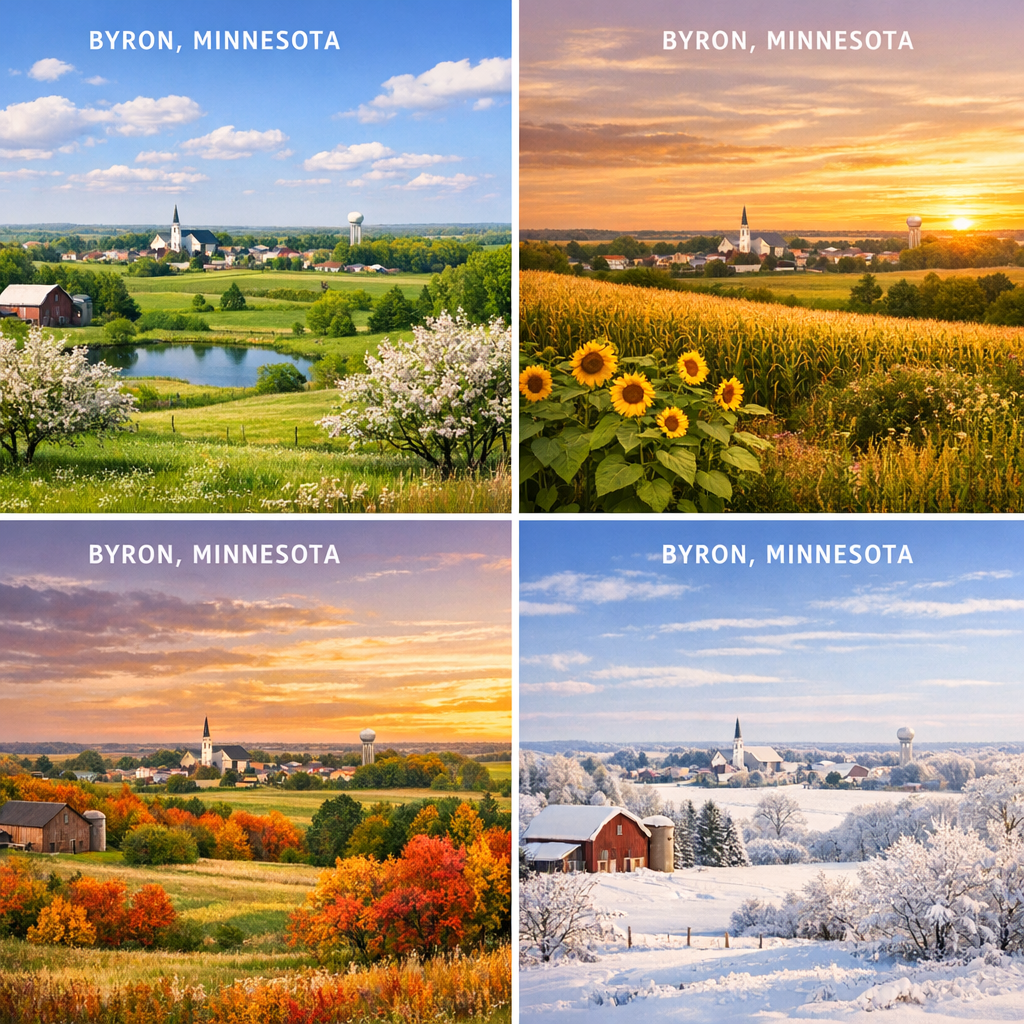
Byron, Minnesota, experiences a diverse range of weather conditions throughout the year, characterized by distinct seasonal changes. Understanding these patterns is essential for residents and visitors alike.
Seasonal Temperature Variations
In Byron, the warm season spans approximately four months, from mid-May to mid-September, with average daily high temperatures exceeding 70°F. July stands out as the warmest month, boasting an average high of 81°F and a low of 62°F. Conversely, the cold season lasts about three months, from late November to early March, with average daily highs below 35°F. January is typically the coldest month, featuring an average low of 9°F and a high of 23°F.
Precipitation and Snowfall
Precipitation in Byron is fairly evenly distributed throughout the year, with an annual average of approximately 33.87 inches. June is the wettest month, averaging 5 inches of rainfall, while January is the driest, with about 1.02 inches. Snowfall is a significant aspect of Byron’s winter, averaging 49.3 inches annually. February tends to receive the most snowfall, averaging 8.23 inches.
Environmental Initiatives
Byron is committed to environmental stewardship. The Byron Community Foundation actively supports local projects in areas such as environmental protection and beautification. Additionally, the Minnesota Department of Agriculture has conducted water quality studies in Byron Township to monitor and improve groundwater quality, particularly concerning nitrate contamination. These efforts include implementing best management practices in farming and promoting the use of cover crops to reduce nitrate leaching.
Understanding Byron’s climate and participating in local environmental initiatives can help residents make informed decisions and contribute to the community’s sustainability.