

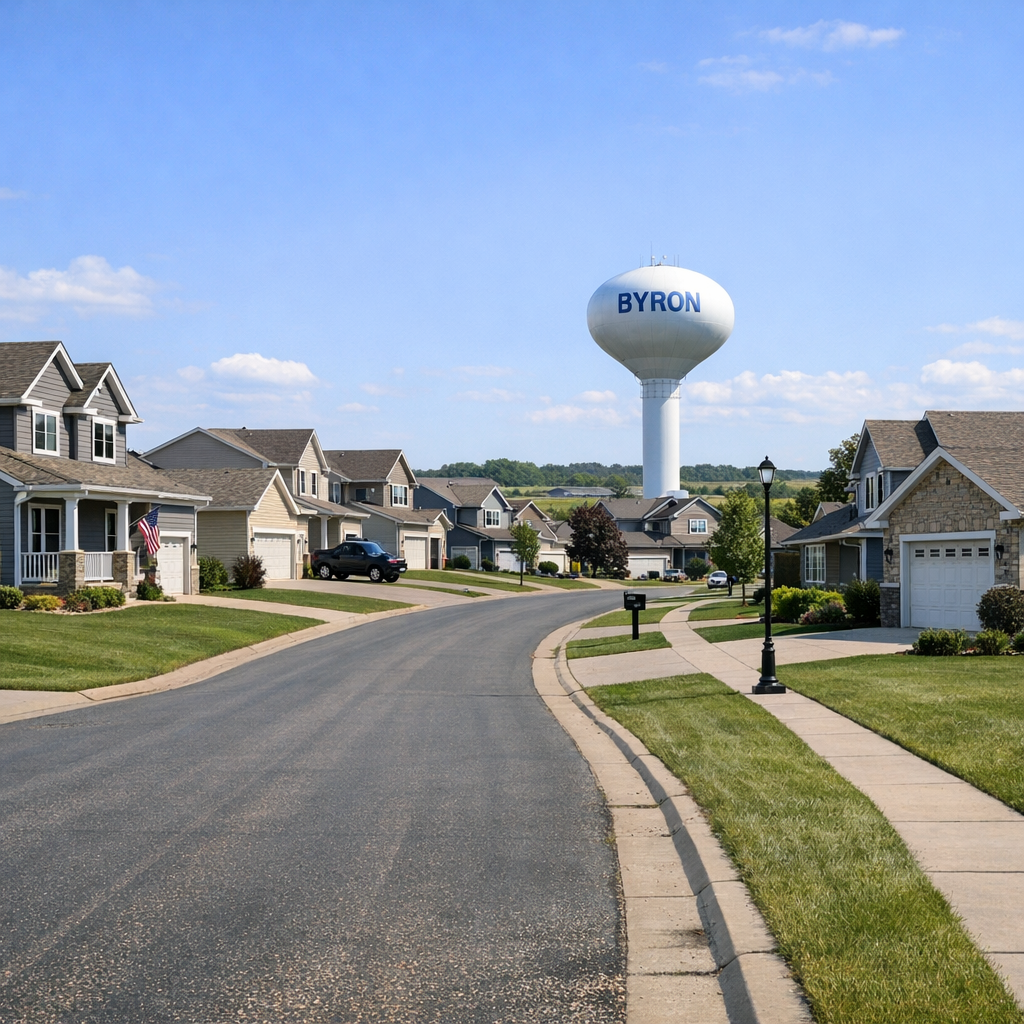
Byron is seeing important shifts in both its real estate and rental markets, driven by changing demand and infrastructure investment. Whether you’re looking to buy or rent, knowing the local numbers and trends can help you make smart decisions.
Home Prices & Sales Trends
The median sale price for homes in Byron in mid-2026 hovered around $370,000, showing an increase of about 12.9% compared to the same period a year earlier. Homes tend to sell more quickly—on average in about 15 days—down from 17 days the previous year. These numbers suggest a tightening market with consistent buyer interest. Average sale price per square foot has also crept upward, indicating greater competition in desirable locations.
Current Rental Price Trends
Rent in Byron varies widely depending on unit type and size. For example, 1-bedroom apartments average around $1,363/month, while 2-bedroom units tend to run closer to $1,640/month. 3-bedroom homes can exceed $1,900/month. Year-over-year changes are modest—most sources show slight increases, around 1–5%, depending on property type.
Home Values & Equity
The average home value in Byron has risen steadily: recent data indicates a value of about $407,500, up approximately 4% over the past year. This reflects both rising demand and limited inventory in certain categories. Areas close to transport corridors and newer neighborhoods tend to show stronger per-square-foot values.
Supply, Market Pace & Conditions
Buyers will find more options than sellers in recent months. Though homes are selling relatively fast, there’s enough inventory—houses on the market and new listings—to give buyers room to shop, especially outside the most in-demand price bands. Median days on market have edged downward in many cases, suggesting good opportunities if the property matches buyer priorities.
Infrastructure & Development Drivers
Infrastructure upgrades are playing a significant role in shaping where growth happens. Projects along county roads and highways—especially corridors like CR 5, CR 3, and access via Highway 52—are unlocking land for residential development. A proposed interchange project on Highway 14 is expected to open up hundreds of acres for commercial and industrial use, which may also affect nearby housing markets.
What It Means for Buyers and Renters
- Buyers: Be prepared for rising prices, but find potential in neighborhoods further from main corridors or in smaller homes/suburbs where competition is slightly calmer.
- Renters: Costs have climbed, particularly for larger units. Smaller apartments offer more affordability but inventory is limited.
- Developers / Planners: Active infrastructure improvements suggest opportunities for new subdivisions, multi-family housing, and infill developments—especially near transport arteries.
Overall, Byron’s real estate landscape is evolving steadily—marked by moderate price growth, tightening yet still varied options, and infrastructure projects that are shaping where and how growth happens. Having clear expectations—and knowing which tools to use—can help you navigate whether you’re renting, buying, or planning new development.